ENGR202 Summer 2023 Q B2[VALID] official answers
In medicine, during an operation, the patient is continually monitored and a combination of anaesthetic drugs are adjusted to ensure normal vital signs are maintained during loss of consciousness. There is some research into automatic anaesthetic drug delivery. However, this is a challenging control problem, due to inter-patient variability, poor understanding of drug mechanisms and difficulties in sensing.
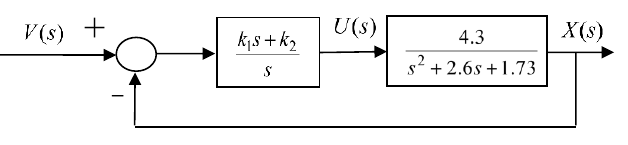
Figure B2-1 shows a Proportional-Integral (PI) control system applied to one aspect of the anaesthetic drug delivery control problem. Here, represents the measured concentration of a drug in the patient's blood and is the applied drug dosage. The value of subsequently impacts on the patient's level of consciousness.
Formulas you may need
- Negative feedback rule: ; series rule (learn this)
- Hurwitz determinant for : (given in the question)
- Stability needs , , (learn this)
- PI controller: (learn this)
- (a)[3]In regard to Figure B2-1: (i) What does represent? (ii) Is Figure B2-1 an example of open-loop or closed-loop control? Explain your answer. (iii) What is usually called?
- (b)[4]Using the rules of block diagram manipulation, derive the Transfer Function for the relationship between and , and hence show that the characteristic equation takes the following form:
- (c)[4]Using the characteristic equation stated in part (b), derive and hence sketch the stability relationship between and . Hint: for a third order system, i.e. , use the following Hurwitz determinant:
- (d)[14]Four standard objectives of control relate to stability, tracking, transient behaviour and disturbance rejection. Carefully define and explain each of these terms, referring to relevant mathematical concepts where possible. In addition, speculate on how these control objectives, and possibly other control objectives that you can think of, could apply in the case of the anaesthetic drug delivery control problem. Finally, comment on the limitations of the proposed PI control system in this context.